Modern Perfumery Should be Going Back to the Past

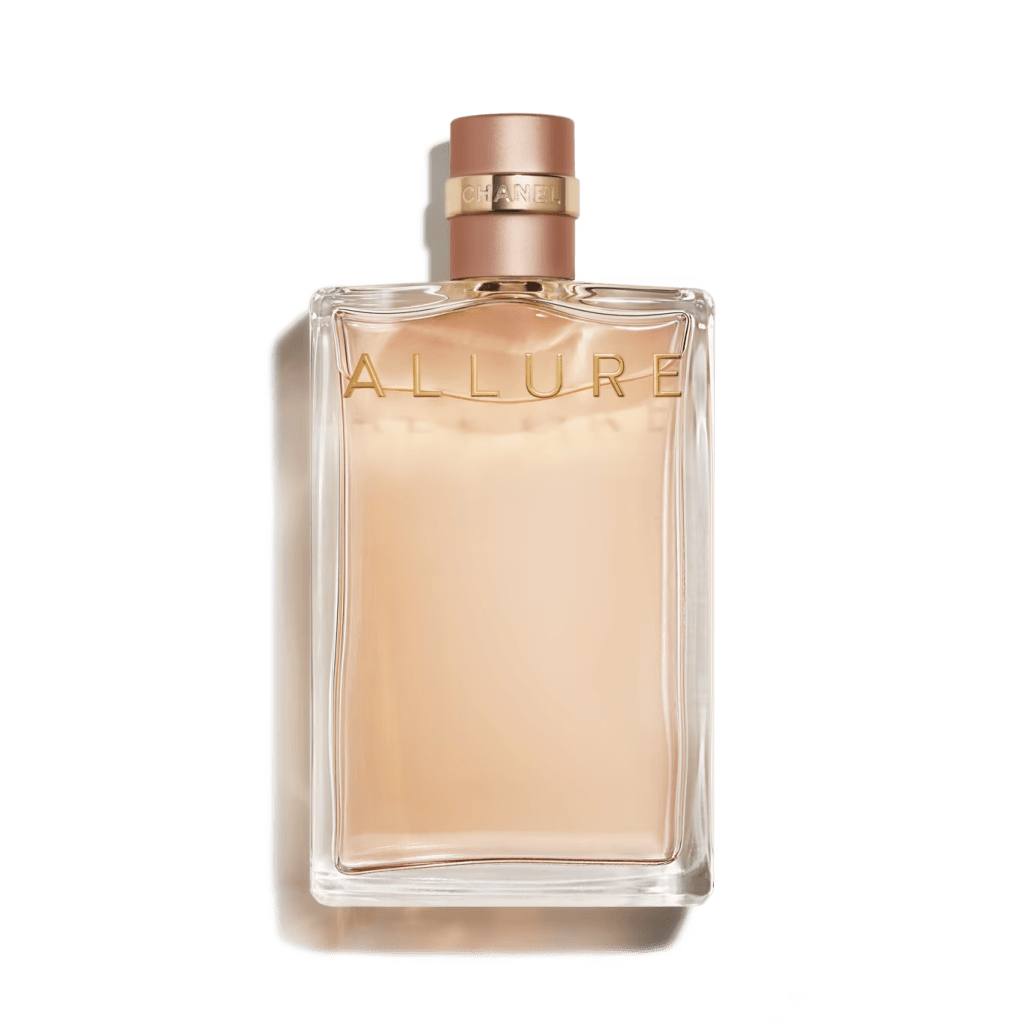
This morning, while spraying Chanel Allure, I caught myself singing “Going Back to Cali,” LL Cool J’s 1988 song about desire, glamour, and the strange pull of Los Angeles.
It made me laugh because I actually did grow up in California, and Allure was one of the perfumes I wore then. For a second, it felt like a private joke between my younger self and the woman standing at the vanity now, surrounded by far more bottles than she ever had in Los Angeles.
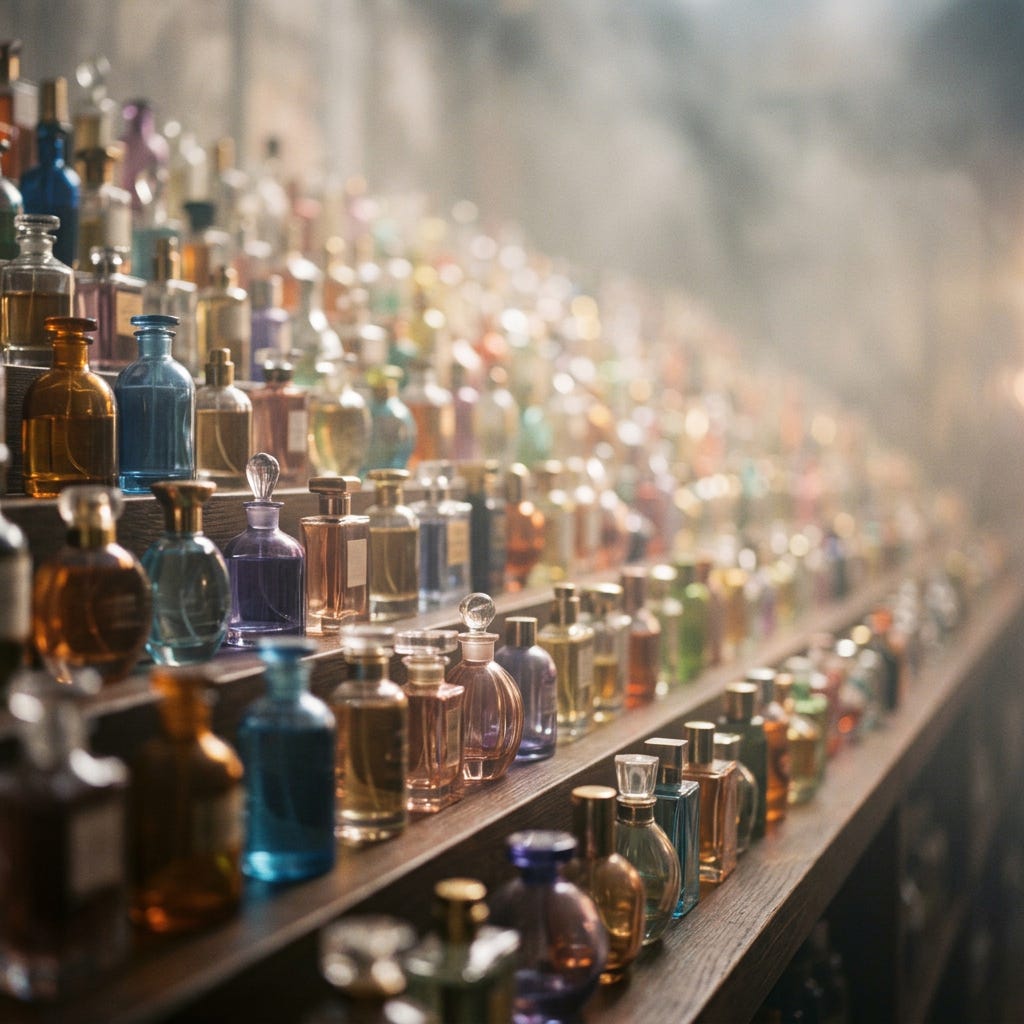
I own many perfumes. Many of them are lovely. But if you blindfolded me and sprayed a large portion of them on strips, I doubt I could identify more than ten with certainty.
That bothers me.
I might recognize the finish before the perfume: the woody-amber glow, the clean musk trail, the saffroned warmth, the peppery-oud bite of materials like Akigalawood. Givaudan describes Akigalawood as one of its unique captive ingredients, with spicy, woody facets of patchouli and agarwood, and elsewhere describes it as derived from upcycled patchouli oil through biotechnology.
This is exactly where the machinery becomes easier to smell. A high-quality natural material such as patchouli carries agricultural cost, variation, sourcing risk, and all the complications of the natural world. A captive material belongs to a different economy. It is controlled by the company that makes it. It scales. It performs. It gives power, trail, texture, and that immediate expensive aura many modern perfumes now share.
There is nothing wrong with using it beautifully. The problem begins when the material becomes louder than the perfume.
This is also where the cult of the superstar perfumer becomes complicated. Quentin Bisch is talented, prolific, and commercially important. His work is everywhere because it speaks the language the market currently rewards: projection, radiance, instant legibility, and a kind of synthetic power that cuts through noise. But when that style appears across brand after brand, I start to question what we are calling a perfumer’s DNA. Sometimes it feels less like the signature of a singular artist and more like the signature of the supplier, the brief, the margin, and the materials the system knows how to sell.

That is why so many contemporary perfumes can smell polished, expensive, and strangely familiar at the same time. We are not always recognizing the perfume anymore. We are recognizing the machinery inside it.
My week of “going back to Cali” started to make sense when I looked at what I had actually been wearing.
Chanel Allure was the emotional key. Allure belongs to a period when a designer perfume could feel easy to wear and unmistakable at the same time. It has warmth, peach, citrus, florals, vanilla, sandalwood, amber, vetiver, and patchouli, all passing through that Chanel finish. There is softness and polish, yet a recognizable woman still lives inside it.
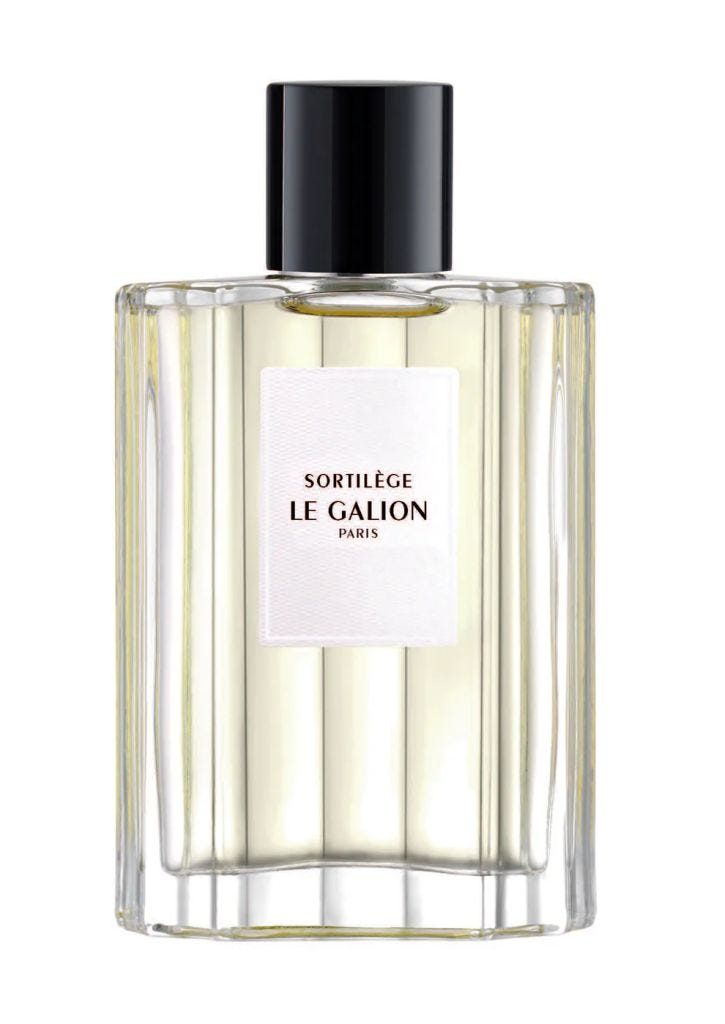
Then there was Sortilège by Le Galion, with aldehydes, lily of the valley, lilac, rose, iris, mimosa, narcissus, jasmine, labdanum, sandalwood, vetiver, musk, and amber. It has the architecture I had been craving without realizing it: a floral aldehyde with a waistline, shoulders, and a hem. It smells dressed.
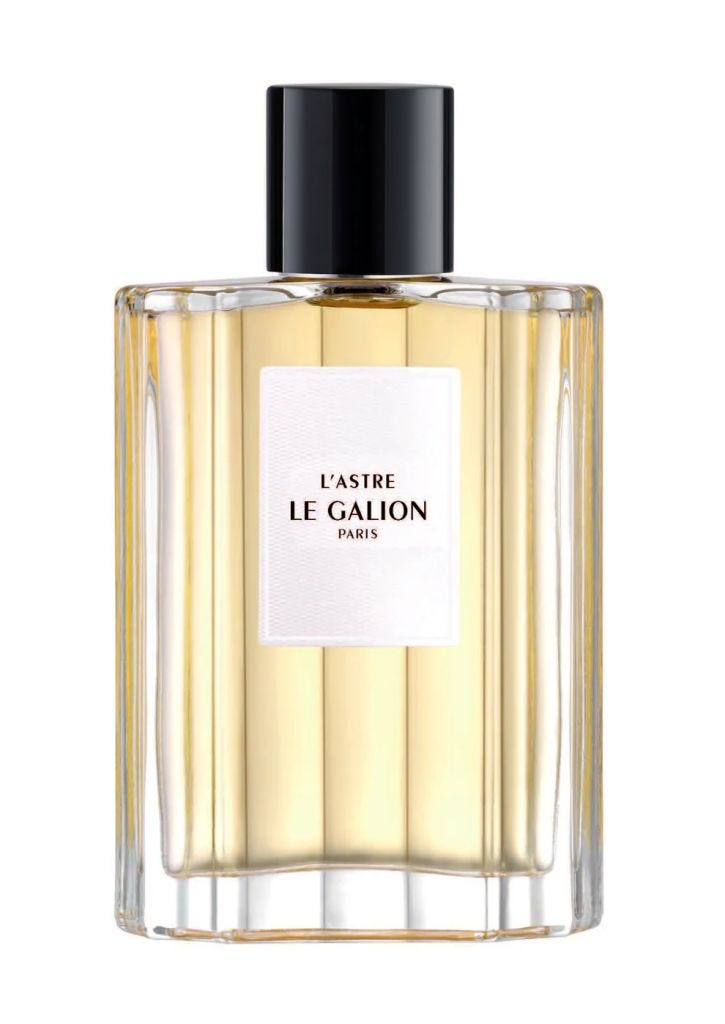
L’Astre by Le Galion, composed by Rodrigo Flores-Roux, moved in a warmer direction: ginger, fennel, thyme, cardamom, ylang-ylang, Indian tuberose, jasmine, orange blossom, amber, Tolu balsam, Madagascar vanilla, and suede. It has spice, flowers, warmth, and skin, while the sweetness stays in proportion.
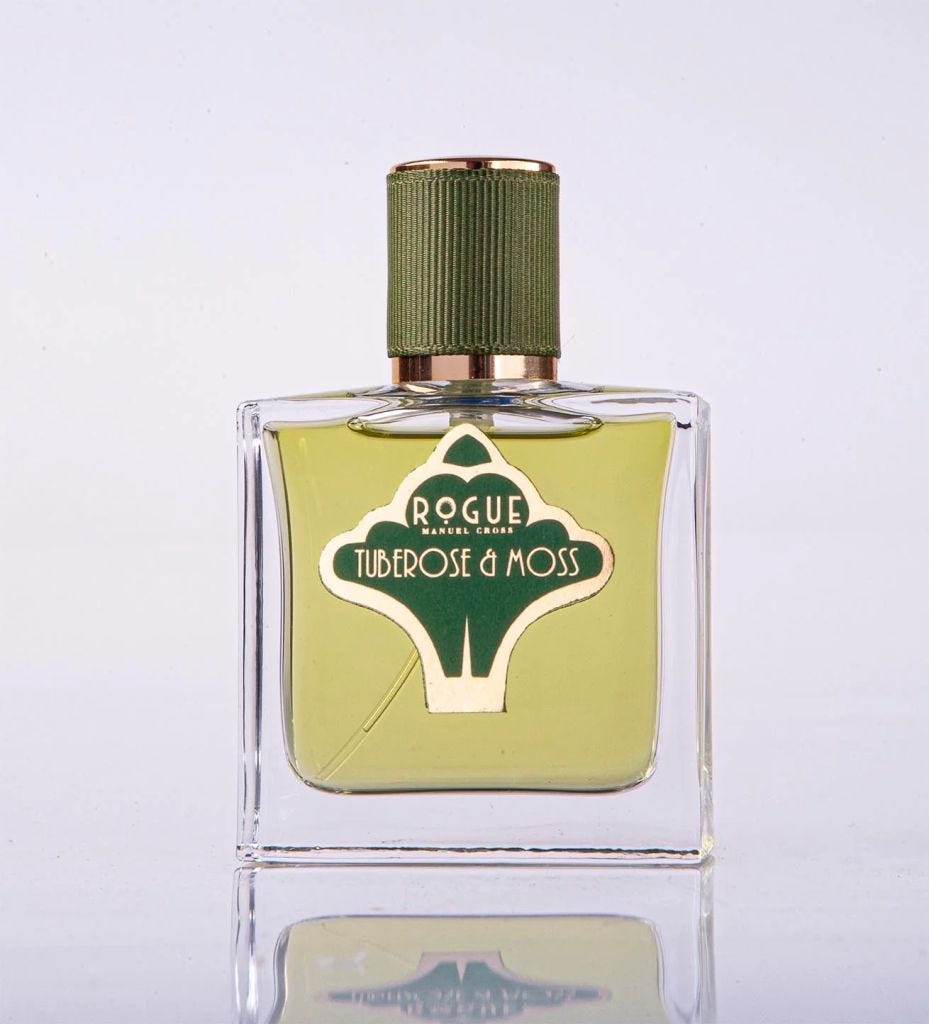
Tuberose & Moss by Rogue Perfumery, by Manuel Cross, brought back the satisfaction of a chypre shape. Bergamot, tuberose, oakmoss, labdanum, cedarwood, pimento, vanilla cream, and musk. It has firmness. Moss and tuberose give the perfume posture. It holds its ground.
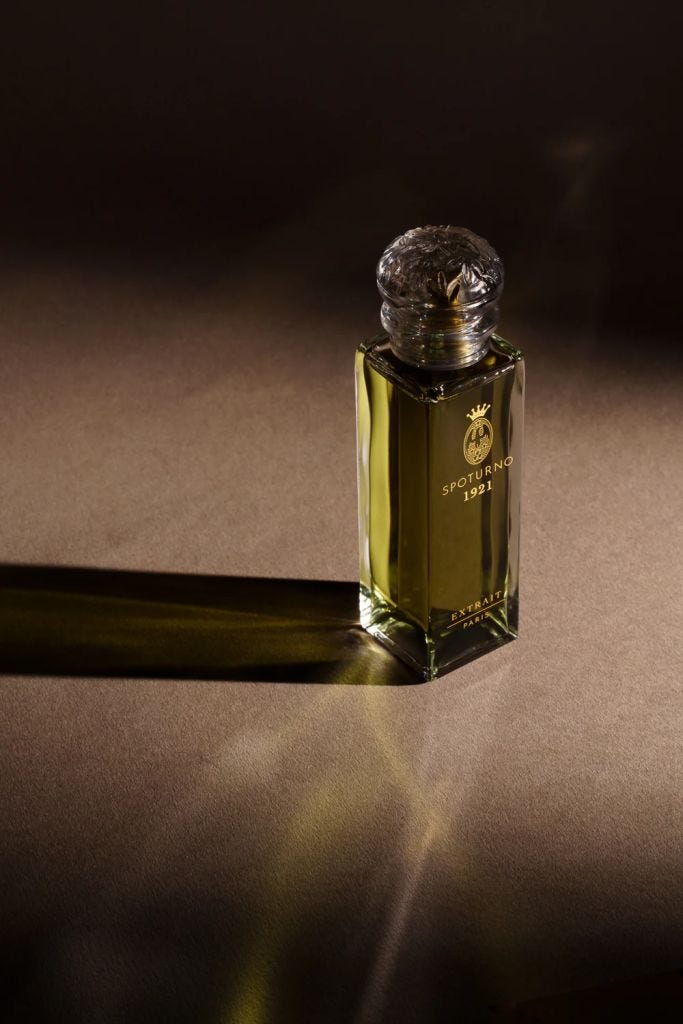
Spoturno 1921, composed by Christopher Sheldrake, gave me another version of old-world elegance: bergamot, mandarin, pink pepper, rose, jasmine sambac, orris, patchouli, vanilla, and benzoin. It has that French perfume gravity I keep wanting lately, sensual and serious without becoming heavy.
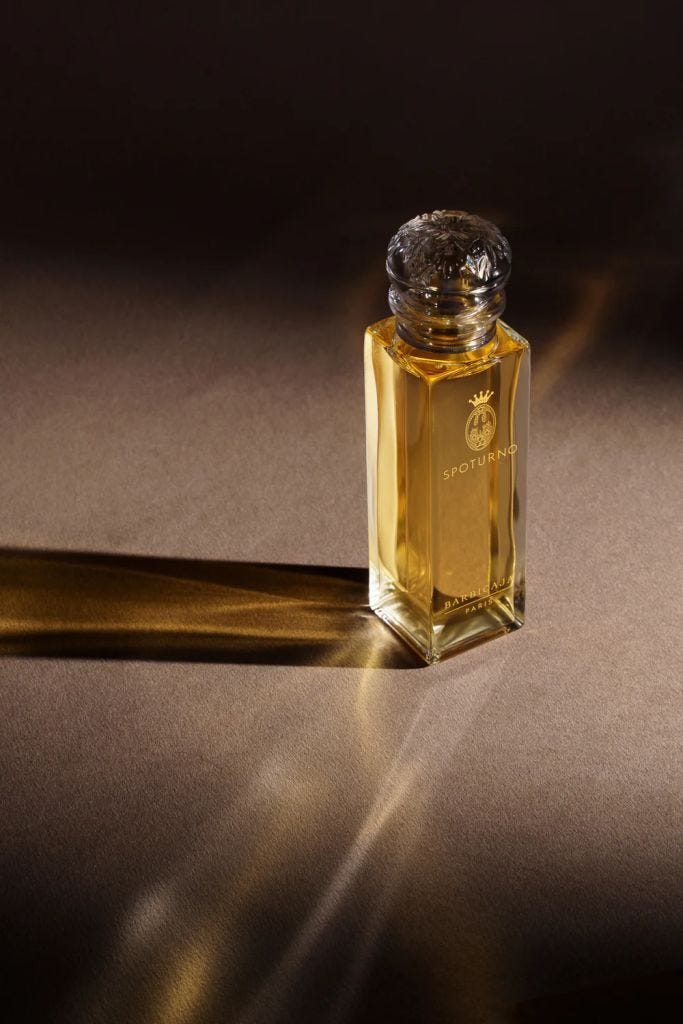
Barbicaja by Spoturno, also by Sheldrake, moved through bitter orange, lavender, rosemary, cedarwood, geranium, clary sage, patchouli, vetiver, and musk. Dry herbs, bitter citrus, sun-warmed wood, an aromatic clarity that feels adult and vintage in the best sense.
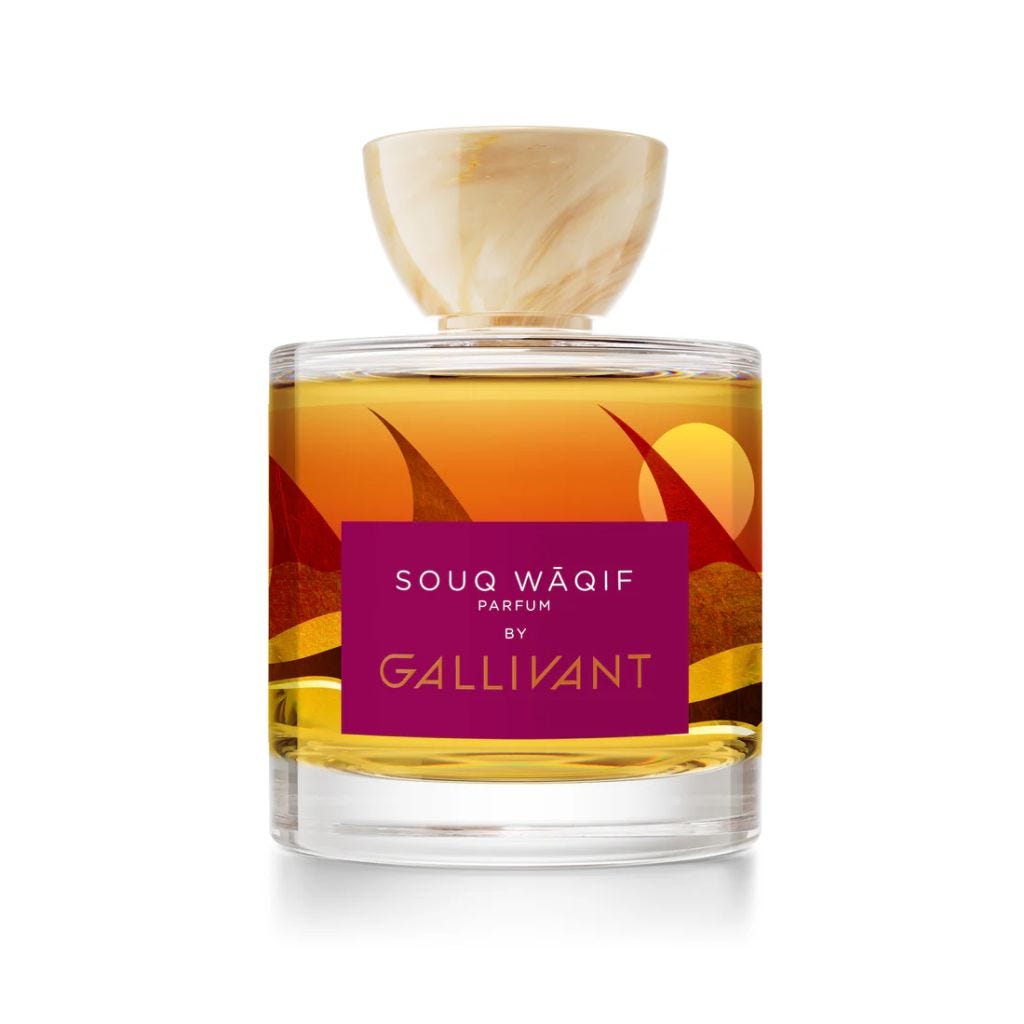
Gallivant’s SOUQ WĀQIF, composed by Céline Perdriel, took the thought beyond French perfume codes. Blood orange, saffron, olibanum, patchouli, geranium, myrrh, oud, labdanum, and guaiac wood. Its vintage feeling comes through smoke caught in cloth, citrus peel crushed between fingers, saffron in warm air, resin on skin, and wood still holding the heat of the day. In the language of the youth, it is serving vintage.
Clinique Calyx has been part of the same return for me. Green, fruity, sharp, floral, almost electric, it reminded me that freshness once had bite. I understand the appeal of modern clean luxury. I own Glossier You, and I like it. Calyx speaks in a different register: grapefruit brightness, green edges, floral sharpness, and a crispness that feels alive rather than freshly laundered.
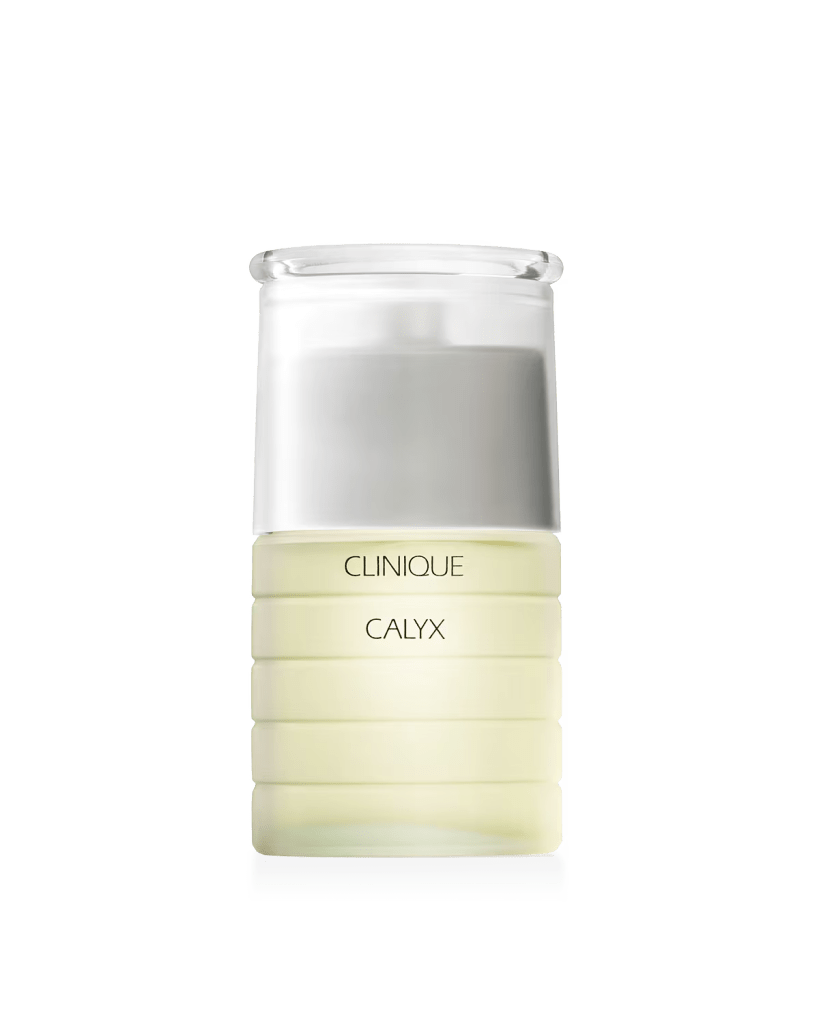
When I looked at these bottles together, I understood why they had been calling to me. The pull came from the relief of smelling perfumes that could still stand apart from the blur. Once I saw that, the industry’s abundance began to look very different.
The trouble begins with the way so many perfumes now come into the world.
A brand can present itself as intimate, artistic, disruptive, artisanal, or niche, while the perfume itself begins inside a process that is far less romantic. A brief is written. Several perfumers compete for it. In some cases, the perfumer may never have a meaningful conversation with the founder or creative director. The exchange moves through evaluators, marketing teams, trend reports, target demographics, price points, and launch calendars. The bottle may speak about memory or rebellion, while the making of it is governed by market logic from the beginning.
Exceptional perfumes still come from major labs, and many brilliant perfumers work inside them. My concern is elsewhere: what happens when thousands of brands, each selling its own mythology, are shaped by a small circle of suppliers, familiar performance targets, and the quiet discipline of profit. The large labs buy the world in bulk: flowers, woods, resins, musks, and molecules. That scale gives them power. When the same materials are used by brand after brand, niche starts to look the same as designer.
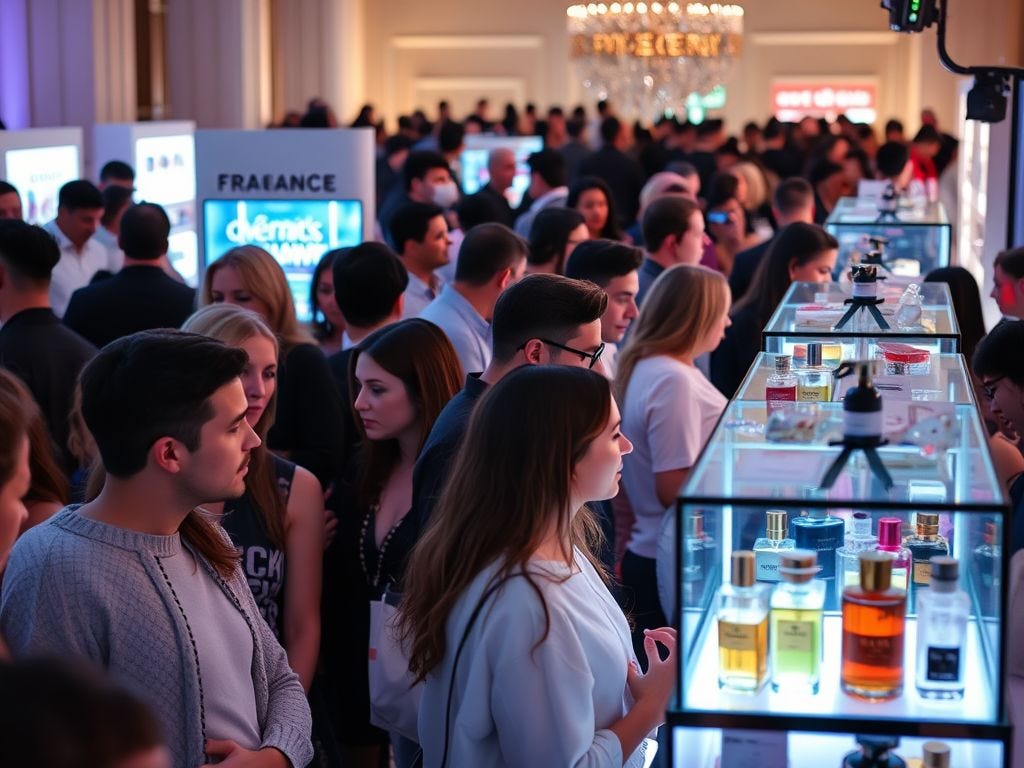
That is where the blur begins. Too many perfumes start to carry the same invisible signature: money, scale, margin, and the gigantic system working quietly behind the bottle.
It may also explain why so many women are buying so much perfume now. The behavior is easy to dismiss as overconsumption, and sometimes that is fair. I think there is a more interesting restlessness underneath it. Many women are trying to find the perfume that gives them the feeling they thought the last bottle would give them. Underneath all of it may be the desire for a bottle that finally connects with them.
That is the itch many new perfumes do not scratch.
It reminds me of food. You can dress mac and cheese with lobster, truffle, smoked gouda, caviar, five cheeses, and whatever luxury wants to prove that day. Some of it may be delicious. Eventually you want the thing itself done properly: butter, cheese, macaroni, heat, salt, calories.
Perfume feels as if it has reached a similar point.
After years of constant launches, viral notes, overworked concepts, and too many brands calling themselves niche, I find myself wanting to make perfume “great again”: florals with structure, chypres with real moss, tuberose with flesh, amber with warmth, freshness with bite, and designer scents that can be easy to wear while having a real face.
This repetition is spread across the whole market. Designer, niche, and artisanal perfume can all fall into the same trap when the category becomes crowded, brief-driven, and eager to produce the next polished thing.
That is why “Going Back to Cali” stayed with me.
This morning, standing at my vanity with Chanel Allure in the air, California was only part of what came back to me. I also remembered a time when I owned fewer perfumes and knew them better. A scent could live on a coat collar, linger in an elevator, become part of how someone was remembered.
Maybe that is what I have been reaching for all week: the part of perfume that had a clearer outline, the part that could stay. Perfume does not need endless new bottles that smell like expensive air. It needs more fragrances with shape, memory, and the courage to be unmistakable.
That is what I mean when I say perfume should go back to Cali.